800W RMS Reference Series Monoblock Amplifier


800W RMS Reference Series Monoblock Amplifier • 800W RMS • 650W x 1-Chan @ 2 Ohm • Variable Bass Boost • Soft Start Turn-on • 4-Way System Protection Circuitry • Preamp RCA Outputs • MOSFET Power Supply
Learn more about the ref1800800W RMS Reference Series Monoblock Amplifier • 800W RMS • 650W x 1-Chan @ 2 Ohm • Variable Bass Boost • Soft Start Turn-on • 4-Way System Protection Circuitry • Preamp RCA Outputs • MOSFET Power Supply

|
Best selling similar products

• 500 watts x 1 channel @ 4 ohm
• 850 watts x 1 channel @ 2 ohm
• 1200 watts x 1 channel @ 1 ohm
• Total RMS Power: 1200 watts
• Class D 1 ohm Stable Monoblock Amplifier
(13)
$169.99
List price $239.99

Deaf Bonce Apocalypse ATOM 1300.1 PRO
• 490 watts x 1 channel @ 4 ohm
• 780 watts x 1 channel @ 2 ohm
• 1300 watts x 1 channel @ 1 ohm
• Total RMS Power: 1300 watts
• Class D 1 ohm Stable Monoblock Amplifier
$199.90
List price $199.90

• 800 watts x 1 channel @ 4 ohm
• 1350 watts x 1 channel @ 2 ohm
• 1700 watts x 1 channel @ 1 ohm
• Total RMS Power: 1700 watts
• Class D 1 ohm Stable Monoblock Amplifier
(35)
$259.99
List price $335.99

• 420 watts x 1 channel @ 4 ohm
• 760 watts x 1 channel @ 2 ohm
• 1000 watts x 1 channel @ 1 ohm
• Total RMS Power: 1000 watts
• Class D 1 ohm Stable Monoblock Amplifier
(38)
$209.99
List price $227.99

• 600 watts x 1 channel @ 4 ohm
• 1000 watts x 1 channel @ 2 ohm
• Total RMS Power: 1000 watts
• Class D 2 ohm Stable Monoblock Amplifier
(24)
$429.99
List price $429.99

• 250 watts x 1 channel @ 4 ohm
• 500 watts x 1 channel @ 2 ohm
• Total RMS Power: 500 watts
• Class D 2 ohm Stable Monoblock Amplifier
(12)
$299.99
List price $299.99

Infinity Reference 10001A (AMPRF10001AAM)
• 600 watts x 1 channel @ 4 ohm
• 1000 watts x 1 channel @ 2 ohm
• Total RMS Power: 1000 watts
• Class D 2 ohm Stable Monoblock Amplifier
$499.95
List price $569.95

• 300 watts x 1 channel @ 4 ohm
• 600 watts x 1 channel @ 2 ohm
• 800 watts x 1 channel @ 1 ohm
• Total RMS Power: 800 watts
• Class D 1 ohm Stable Monoblock Amplifier
(19)
$299.99
List price $329.99

• 240 watts x 1 channel @ 4 ohm
• 400 watts x 1 channel @ 2 ohm
• 600 watts x 1 channel @ 1 ohm
• Total RMS Power: 600 watts
• Class D 1 ohm Stable Monoblock Amplifier
(16)
$189.99
List price $239.99

Rockford Fosgate Prime R2 R2-1200X1
• 400 watts x 1 channel @ 4 ohm
• 800 watts x 1 channel @ 2 ohm
• Total RMS Power: 1200 watts
• Class D 1 ohm Stable Monoblock Amplifier
(23)
$449.99
List price $449.99
Manufacturer:
Model Number:
REF1.800
Weight:
9.52lbs
Internal SKU:
ref1800
Internal Product ID:
25536

| 5 star |
|
78% |
| 4 star |
|
11% |
| 3 star |
|
11% |
| 2 star |
|
0% |
| 1 star |
|
0% |
| Durability | ||
| Value | ||
| Features | ||
| Design | ||
| Usability |
very satisfied customer
I got this to go with the ref. 480.4 its like a match made in heaven. solid bass great punch and clean sound. They really do complement each other. If you love sound and you have quality speakers, don't hesitate on these amps, get a set to power your speakers. you will not be disappointed. I have this on two 10's at 2 ohm load. Very goog vibes all around.
7 found this helpful
Great Amp
first of all coming from a sony amp this thing is nice, the bass from my sealed subs is so tight, can really feel the kick from the drums and the bass guitar in my rock and, its really small and has the flexibility to be ran with two of the same amps for 1600 watts at 2ohm. Overall really good sound. Dont know how long it will last because i just got it but still havnt had any amp crap out on me, just stolen.
5 found this helpful
Awesome
This MB Quart monoblock is a great value. Just take a look at the suggested retail price. MB Quart is a higher caliber product with an unbeliviable amount of R&D incorporated into their products, ultimately making MB Quart superior. Just for example, the RMS ratings on this amp (REF 1.800) is a CEA compliant rating. Although Sonic offers this amp at an ubelivable price, don't be fooled by competitors. Fosgate, MTX, and other leading namebrands saw their heyday in the late 80's and early 90's, but MB Quart has been a consitent top performer. Many retailers stopped carrying the MB Quart products in their storefronts due to the inability to move the product due to pricing. The pricing on MB Quart products were higher due to the simple fact that MB Quart is a superior product. Bottom line: You get what you pay for; There is no such thing as a free lunch. Currently I am running this amp on 2 JL W3v3-4 subs at 2 ohms feeding 650 CEA compliant watts to them.
5 found this helpful
Awesome Amp
At the recommendation of a friend, I bought this amp for a temporary setup pushing a JL Audio CP212-W0v2 Slot-Ported BassWedge. Since you can hook 2 of them together & get 1600watts @ 2 ohm, I will more than likely keep when I upgrade the subs later.
Not sure of the durability yet, but it seems well built, looks great & does not get hot. I love it.
5 found this helpful
MB Quart REF 1.800 amp, so far so good!
I purchased this amp as a replacement for a failed Phoenix Gold amp. My other gear was 90's era, mostly PG. This amplifier has controls on both sides, my other one had all the controls on one side, thus I had to rejigger some of the wires and such. When the amp arrived (quite quickly, I might add) it was double boxed and in perfect shape. Once I accounted for different mounting holes and plugged the old ones, the install was quick and painless. I mounted it in the vertical plane, one not specifically recommended by the maker. That was the way my PG gear was set up, with finned sink. No matter, it runs very cool, with no thermal or voltage issues. In any case, I can set up a fan if need be. It is currently running two MB Quart 4ohm.10' 's for a pretty easy to drive load. It is a Class D monoblock...very efficient and logical for this type of setup. I think that the PG class A or A/B that I was using had a higher sq, but getting their new owners to repair it was like trying to get a goldfish to ride a bicycle. And very costly. Sound is very good, though I might need some fine tuning help in the future. My set up uses an eqxover with its own subsonic filter, thus the one on the amp is redundant. And set to its lowest level. I cannot switch off the eqx's xovr, or the one on the amp. I have not quite resolved that one yet. Unless I run a separate rca to the 1.8 and bypass the eqxovr. But that would also bypass the eq. Not good. I would rather use my EQX's xovr, as it is set at 90hz. The 1.8's is variable. Bottom line, lots of value, and flexibility. But some of the points built in to address limitations of older gear may make it challenging to integrate with older gear. It feels very solid, and weighs in at a hair over 9.5 lbs. I am sure that you could put together a very solid system if you started out fresh with all amplification from MBQ. Especially if you used one of the multichannel products. Connections that are plated are silver or chromed. If you use the provided end caps, you wont see those. As a monoblock, you will not have options such as stereo, this is a dedicated subwoofer amp.
It has dual speaker terminals, that are internally connected. So one sub, l+r the the speak, l+r to the amp. Two subs, l+r the the speaks, l+r to the two two sets of terminals on the amp. A slightly simpler hookup than back in the bridged mono days. And two speaker wires instead of one. If you are using a woofer setup with more than two speaks, you are on your own.:) A wired remote sub output control is included, many other makers charge extra for that.
Overall I am pretty satisfied, the cons are pretty minor, and these days, most amps are similar in layout, power, ground, remote and speaker leads on one side, filters, gain, boost, rca ins, remote, master/slave on the other. For this one. If your are debating this one, and are sitting on the fence, maybe this will help you to decide. Cheers!
Pros: Good looks, and the orange "chicklet" that lights up when the amp is on is nice, especially at night. Lots of solid power and headroom. No turn on or off thumps. If you need it, you can link two of these together. If you do that, I sense the purchase of a new alternator in your near future. If you need it the onboard xovr is a good thing to have. Same for the subsonic filter. Wired remote output control.
Cons: The end caps are lightweight and kind of cheezy feeling. However once in place they integrate well. In my case, my rca's have 90 degree angled ends, and I could not use them. If you are using regular rca's no problem there. But it looks ok without them.
Equalizer and subsonic filters, while adjustable, are not bypassable.
If you use the highest quality 4ga. wire, or at least if it has thin insulation, be prepared to cut off a few strands of wire so the exposed wire will fit in the power connection.
5 found this helpful
Not good if you go off roading
It was working great when I first got my system set up in my jeep. I ordered it back in February, and there were no problems what so ever. It wasn't until after I had gone off roading once or twice when it started to act differently. At first the bass would work like normal then it would randomly shut off. After testing both my sub and amp to find the problem, we found out that it was the amp because a part had broke inside. Overall it was a nice amp for the price but if you ever plan to go off roading, don't get it.
4 found this helpful
Great power in a small footprint.
I have this hooked up to 2 15" Kicker L7's running 1 ohm and they pound. I am very surprised at how small this amp is and it is definitely pushing the 800 watts RMS that it says it does. The side covers really complete the look of the amp and the bass knob is really nice. Overall, I would say this is one of the best amps for the money.
4 found this helpful
Works Great
Got this amp pushing two JL 10w0v3 at 2 ohm. pushes them very well and i have them in seperate sealed boxes gives that nice tight bass.
2 found this helpful
Own 2
For the longest time I had my one reference i paid $*** for, just ran at .5 ohms pushing my 4 12's and i needed a second 130 amp alternator to keep up, after I strapped a second amp I blew one of my subs and needed to upgrade to something that can take the current these amps flow through them. Would recommend best bang for the buck, PERIOD. Solid and reliable good cooling and took abuse tho I wouldn't recommend running below 1 ohm impedance like I did, now I've got a nice 2 ohm load and I'm getting my 1600 watts it seems to be less demanding @ 2 ohms..
2 found this helpful

Complete 2-Channel CCA 4 Gauge Amp Kit with RCA Cables and Speaker Wire
(169)
$34.99
List price $59.99

Complete 2-Channel CCA 4 Gauge Amp Kit with RCA Cables and Speaker Wire
(63)
$34.99
List price $59.99

Complete 2-Channel CCA 4 Gauge Amp Kit with RCA Cables and Speaker Wire
(60)
$34.99
List price $59.99

Complete 2-Channel 4 Gauge Amp Kit with RCA Cables and ANL Fuse Holder
(30)
$61.99
List price $68.99

Complete 4 Gauge Amplifier Wiring Kit with 2 Channel RCA Interconnects & ANL Fuse Holder
(11)
$35.99
List price $79.00

Complete 2-Channel 4 Gauge Amp Kit with RCA Cables and Speaker Wire
(1)
$74.99
List price $159.00

Complete 2-Channel 4 Gauge Amp Kit with RCA Cables and Speaker Wire
$139.99
List price $167.99

4 Gauge Premium (CCA) Copper Clad Aluminum Amplifier Power Wiring Kit with Speaker Wire
(20)
$24.99
List price $49.99

4 Gauge 100% (OFC) Oxygen Free Copper Amplifier Power Wiring Kit with Speaker Wire
(78)
$99.99
List price $131.99

The XLOC22X helps you easily integrate with your factory or aftermarket stereo system
(5)
$39.99
List price $99.99

Looking to fine tune the bass in your vehicle? Look no further
(8)
$79.99
List price $119.99

NVX XIV25 V-Series 2-Channel RCA Cable
16.4 ft of V-Series 2-Channel RCA Audio Premium Interconnect Cable with Dual Twisted Pair Hyper-Flex Technology
(43)
$12.99
List price $18.99

NVX XWS1225 12 AWG Speaker Wire
25 ft. of True 12 Gauge 100% Copper EnvyFlex Speaker Cable/Wire
(56)
$29.99
List price $49.99

12 Gauge 7 Meter (23 Ft) Speaker Wire (CCA)
12 Gauge 7 Meter (23 Ft) Speaker Wire (CCA)
(43)
$6.99
List price $14.99

80 Amp Smart Relay Isolator (XSBI80)
Smart isolator - Monitors and auto-charging feature!
(2)
$24.99
List price $49.99

Great for isolating a second batter making it dedicated to the stereo system
(10)
$15.99
List price $19.99

200 Amp Smart Relay Isolator (XSBI200)
Smart isolator - Monitors and auto-charging feature!
(6)
$49.99
List price $79.99

200 Amp Relay Isolator (BIR200)
Great for isolating a second batter making it dedicated to the stereo system
(17)
$49.99
List price $59.99

500 Amp Smart Relay Isolator (XSBI500)
Smart isolator - Monitors and auto-charging feature!
(8)
$89.99
List price $109.99

500 Amp Relay Isolator (BIR500)
Does not create a voltage drop to the second battery like conventional isolators
(36)
$79.99
List price $95.99

True 1.0 Farad 20V Capacitor with Digital Read-out, Built-in Distribution Block
(33)
$109.99
List price $131.99

1.0 Farad Capacitor with Digital Red Display for up to 1000W Max
(80)
$38.99
List price $79.99

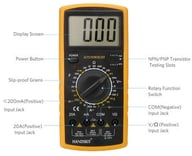
Belva Nine Function Digital Multimeter
Perfect for any installation and troubleshooting
(7)
$9.99
List price $29.99

Universal Positive/Negative 1/0 or 4 Gauge Battery Terminal
Make installation a breeze with the XBTU
(19)
$14.99
List price $24.99

World's Smallest AFS / Mini ANL Fuse Holder
Accepts 4 gauge or 8-gauge wire
(15)
$9.99
List price $19.99

4/8 Gauge Mini ANL (MANL, AFS) Fuse Holder
4/8 Gauge Mini ANL (MANL, AFS) Fuse Holder
(11)
$4.99
List price $9.99

High Quality Element Resistant AGU Fuse Holder
Belva BAGUH2 AGU Fuse Holder
(2)
$4.99
List price $9.99

Modular Linkable ANL Fuse Block
Modular Linkable ANL Fuse Block
(4)
$14.99
List price $59.99

ANL/Mini-ANL Fuse Holder with 1/0 or 4 Gauge Input and Output
No-fail termination and current flow, it helps keep your system protected and running smoothly
(51)
$12.99
List price $24.99

4/8 Gauge Mini-ANL/MANL/AFS Fuse Holder
4/8 Gauge Mini-ANL/MANL/AFS Fuse Holder
(6)
$7.99
List price $9.99

4 Pack of 80 Amp Nickel-Plated MANL Fuse
Mini-ANL (MANL/AFS) 80A Nickel Plated Fuses
(19)
$3.99
List price $8.99

4 Pack of 100 Amp Nickel-Plated MANL Fuse
Mini-ANL (MANL/AFS) 100A Nickel Plated Fuses
(17)
$3.99
List price $8.99

4 Pack of 150 Amp Nickel-Plated MANL Fuse
Mini-ANL (MANL/AFS) 150A Nickel Plated Fuses
(11)
$3.99
List price $8.99

2 Pack of 100 Amp Nickel-Plated ANL Fuse
ANL 100A Nickel plated for better power transfer
(8)
$3.99
List price $7.99

2 Pack of 200 Amp Nickel-Plated ANL Fuse
Two fuses per order. High quality 200 Amp ANL Fuses
(23)
$3.99
List price $7.99

2 Pack of 300 Amp Nickel-Plated ANL Fuse
Two fuses per order. High quality 300 Amp ANL Fuses
(19)
$3.99
List price $7.99

Gauge Reducer, 4 Gauge Input to 8 Gauge Pin
Great for amplifiers that do not accept a large gauge power wire
(23)
$9.99
List price $19.00

Pair of 4 Gauge Spade Terminals, #8 Opening
Spade Terminals • 4 Gauge • 1 Red & 1 Black • Nickel Plated
(7)
$1.99
List price $3.99

4 Gauge Ring Terminals, 5/16" Opening
Nickel Plated Brass - 5 Pieces (3 Red & 2 Black)
(3)
$4.99
List price $6.99

4 Gauge Ring Terminals with 3/8" Opening (5 Pieces)
4 Gauge Ring Terminals with 3/8" Opening (5 Pieces)
(8)
$2.99
List price $9.99

(4-pack) 4 Gauge Solid Copper Ring Terminals with Shrink Tubing
(4-pack) 4 Gauge Solid Copper Ring Terminals with Shrink Tubing
(25)
$7.99
List price $9.99

0.25 Meter (0.86 ft) Hyper-Flex RCA cable w/ Serpentine-Cut Nickel Plated Connectors
(21)
$14.99
List price $19.99


Modern vehicles often require specific brackets, wiring harnesses, and mounting solutions. A fit guide ensures:
Whether you're replacing a factory stereo or upgrading your entire audio system, the Fit Finder eliminates uncertainty.